




Cloud computing is one of the most important technologies in today’s IT industry, and Microsoft Azure is one of the most widely used cloud platforms in the world. Organizations are moving their data and infrastructure to the cloud, and as a result the demand for skilled Azure professionals is growing quickly. To stand out and become a valuable asset for any company, you need to prove your skills, and earning one of the right Azure certifications is the clearest way to do that.
Whether you are just starting your journey or already working in IT, a Microsoft Azure certification verifies your skills and shows employers that you understand Azure services and cloud architecture. Most organizations want professionals who not only understand cloud concepts but can also design, manage, and secure complex cloud environments.
This guide covers the top 7 Azure certifications for 2027, the updated Azure certification path, exam costs, and how to choose the best Azure certification for your career goals.
2026 update: Microsoft retired several popular exams this year, including AZ-500, AI-102 and AZ-204, and DP-203 retired in 2025. This list only includes certifications you can still earn today, with each retired exam’s official replacement.
Why Are Azure Certifications Important?
Before looking at the certifications, it is important to understand why earning a Microsoft Azure certification is valuable for IT professionals.
An Azure certification proves your knowledge of cloud services, security, and data solutions. It makes it easier to get hired and to find better job opportunities, because employers can trust that you have the skills their projects require.
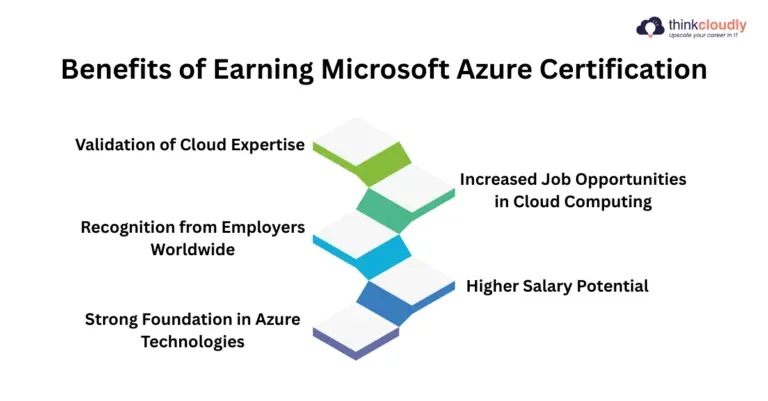
Certifications like Azure Fundamentals (AZ-900) give beginners a starting point, while the advanced certifications covered below prepare professionals for specialized roles in cloud administration, architecture, security, AI, and data.
Top 7 Microsoft Azure Certifications in 2027
Here are the most valuable Azure certifications to grow your cloud computing career in today’s IT industry.
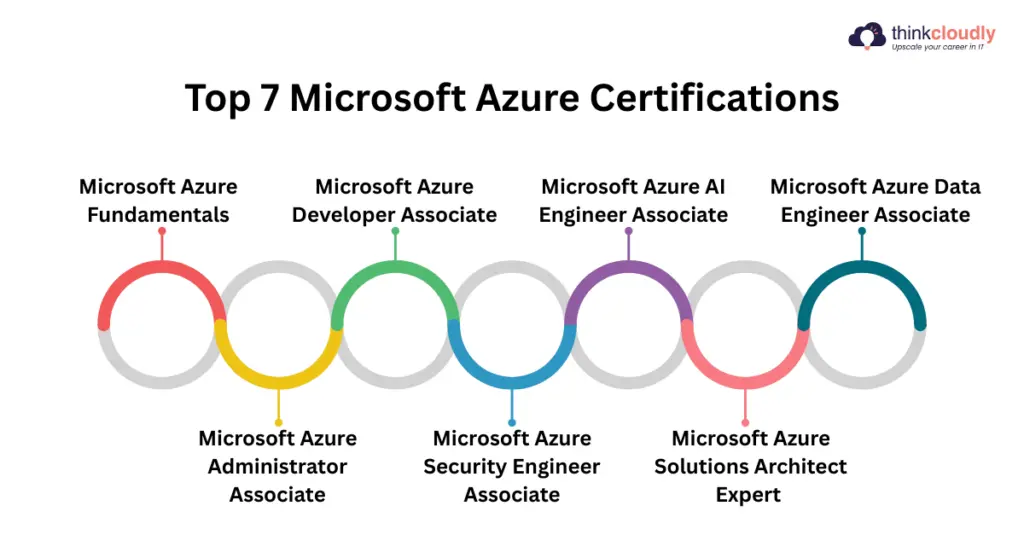
1. Microsoft Azure Fundamentals (AZ-900 Certification)
The AZ-900 certification is the starting point for anyone entering cloud computing, because it focuses entirely on Azure fundamentals. It is the best Azure certification for beginners: anyone can learn it, with little or no prior cloud experience.
AZ-900 covers the basic concepts of cloud computing and makes sure learners understand core Azure services such as virtual machines, networking, and security. For professionals planning their Azure certification path, AZ-900 builds the knowledge needed to understand how Microsoft Azure works and how organizations use cloud services in real-world environments.
Key topics covered in the AZ-900 certification:
- Basic concepts of cloud computing
- Azure services and solutions
- Azure security and compliance
- Pricing and support models
AZ-900 is recommended as the first step on the Azure certification path.
2. Microsoft Azure Administrator Associate (AZ-104)
The Azure Administrator certification verifies the skills required to manage cloud resources in Microsoft Azure. Professionals pursuing AZ-104 learn how to configure and manage virtual networks, monitor Azure environments, and implement storage solutions.
AZ-104 is ideal for cloud engineers and IT professionals responsible for managing Azure infrastructure. The knowledge gained from AZ-900 will be helpful while preparing for it.
Key skills covered in AZ-104:
- Managing Azure identities and governance
- Implementing storage solutions
- Managing virtual machines and networking
- Monitoring and backing up Azure resources
AZ-104 is highly valued by organizations running large cloud environments, and it is also the required prerequisite for the Azure Solutions Architect Expert certification.
3. Microsoft Azure AI Cloud Developer Associate (AI-200, replaces AZ-204)
This certification is designed for software developers who build cloud applications using Microsoft Azure services. It replaced the Azure Developer Associate (AZ-204), which retired on July 31, 2026. The new exam keeps the core developer skills and adds AI-powered application patterns.
Developers learn to design, build, test, and deploy cloud-based applications using Azure tools and frameworks and to connect Azure services with APIs, databases, and AI services.
Key topics covered in AI-200:
- Developing Azure compute solutions
- Implementing Azure storage solutions
- Integrating AI services into cloud applications
- Monitoring and troubleshooting applications
Professionals who start with Azure fundamentals can progress to this certification to upgrade their development skills.
4. Microsoft Cloud and AI Security Engineer Associate (SC-500, replaces AZ-500)
Cybersecurity is one of the most essential elements of cloud infrastructure. The SC-500 certification focuses on securing Azure environments, protecting sensitive data, and, new in 2027, securing AI workloads. It replaced the AZ-500 Azure Security Engineer Associate certification, which retired on August 31, 2026.
Professionals pursuing SC-500 learn how to implement identity protection, monitor security threats, and secure cloud workloads. It is an ideal choice for cybersecurity specialists, SOC analysts, and cloud security engineers.
What you learn in SC-500:
- Identity and access management with Microsoft Entra ID
- Network, compute, and storage security
- Threat protection with Microsoft Defender for Cloud and Microsoft Sentinel
- Securing AI workloads and data
Security-focused professionals are in high demand, which makes SC-500 one of the most valuable Azure certifications for anyone interested in cybersecurity roles. If you already hold AZ-500, it stays on your transcript, but you can no longer renew it.
5. Microsoft Azure AI Apps and Agents Developer Associate (AI-103, replaces AI-102)
Artificial intelligence is increasingly built into cloud platforms, so every cloud professional needs to understand how AI is used in real-world scenarios. AI-103 replaced the Azure AI Engineer Associate (AI-102), which retired on June 30, 2026.
This certification prepares professionals to design and build AI-powered solutions using Azure, with a strong focus on generative AI, AI agents, and Microsoft Foundry. Intelligent applications can automate tasks and respond to users, which makes this skill set highly practical.
You will learn to build generative AI apps, implement retrieval-augmented generation (RAG), develop AI agents, and integrate AI into cloud-based applications. AI-103 is usually pursued by professionals with a background in Azure fundamentals and development who want to specialize in AI.
6. Microsoft Azure Solutions Architect Expert (AZ-305)
The Azure Solutions Architect certification is one of the most advanced and respected Azure certifications because it focuses on designing large-scale cloud solutions that are secure and cost-effective. Candidates learn how to design cloud infrastructure and networking strategies. You need the AZ-104 Azure Administrator Associate certification to earn this expert-level credential.
Key skills you learn with AZ-305:
- Designing solutions for Azure infrastructure
- Designing identity, governance, and security architecture
- Designing storage and networking solutions
- Optimizing performance and scalability
Professionals who complete this certification are often trusted to lead cloud architecture projects in their organizations.
7. Microsoft Fabric Data Engineer Associate (DP-700, replaces DP-203)
Data engineering is one of the fastest-growing fields in cloud computing. DP-700 replaced the Azure Data Engineer Associate certification (DP-203), which retired on March 31, 2025, and it focuses on designing and managing data solutions using Microsoft Fabric. It teaches professionals how to build data pipelines, manage data storage, and make sure data is processed efficiently.
Key skills you learn with DP-700:
- Designing lakehouse and data warehouse solutions
- Implementing data pipelines and Dataflow Gen2
- Processing real-time data with eventstreams
- Ensuring data security and governance
This certification is mostly pursued by data engineers who already know Azure fundamentals and want to specialize in cloud data architecture.
Azure Certification Path for 2027
The Azure certification path helps professionals progress from foundational to advanced knowledge of Azure.
|
Certification |
Level | Area of focus |
Best for |
|---|---|---|---|
| AZ-900 | Fundamentals | Azure fundamentals |
Beginners, non-technical roles |
|
AZ-104 |
Associate | Administration |
Cloud administrators, support engineers |
|
AI-200 |
Associate | Cloud and AI development |
Software developers |
|
SC-500 |
Associate | Cloud and AI security |
Security engineers, SOC analysts |
|
AI-103 |
Associate | AI apps and agents |
AI engineers, developers |
|
DP-700 |
Associate | Data engineering on Fabric |
Data engineers |
|
AZ-305 |
Expert | Cloud architecture |
Senior engineers, architects |
Starting with Azure fundamentals helps you build a strong base before moving on to associate and expert certifications.
How Much Do Azure Certifications Cost?
In the United States, the AZ-900 fundamentals exam costs about USD 99 and associate or expert exams cost about USD 165. Prices are set per country, so check the exact price on the exam page on Microsoft Learn before booking. Associate and expert certifications must be renewed every year through a free online assessment; fundamentals certifications do not expire.
Which Azure Certification Should You Choose?
- New to cloud: start with AZ-900, then AZ-104.
- Want to manage cloud infrastructure: AZ-104, then AZ-305.
- Software developer: AZ-900, then AI-200.
- Security career: AZ-900 or AZ-104, then SC-500.
- AI career: AZ-900, then AI-103.
- Data career: AZ-900, then DP-700.
Conclusion
Cloud computing is central to the future of technology, and Microsoft Azure will continue to be one of the most powerful cloud platforms used by organizations worldwide. Earning the right Azure certifications verifies your expertise and increases your chances of success in the IT job market.
Beginners usually start with AZ-900 to learn the basics before moving on to advanced certifications such as SC-500 for security or AI-103 for AI, depending on their career goals.
By choosing the right step on the Azure certification path and upgrading your skills continuously, you can build a strong, future-proof career in the IT industry.