Would it surprise you to learn that a Scrum Alliance course page still bundles a 2-day live class with a 2-year professional membership, even though the entire training now runs over a screen instead of a hotel conference room? That single detail explains a lot about where certification has landed in 2026.
Choosing the best online Scrum Master certification program is no longer just about picking a logo for a resume. It means weighing exam difficulty, renewal costs, and how much of the training actually happens live versus self-paced.
This guide walks through the major programs available right now, what each one really costs once every hidden fee is counted, and how to pick the one that fits an actual career goal rather than just a marketing headline.
Why Does an Online Scrum Master Certification Make Sense in 2026?
Live, instructor-led training moved online years ago, but 2026 is the year it became the default rather than the exception. Most Scrum Alliance-authorized trainers now run their sessions over Zoom with breakout rooms and shared boards instead of flip charts, and Scrum.org’s PSM courses follow the same pattern.
That shift matters because it removes the two biggest traditional barriers: travel cost and geography. A professional in a smaller city no longer has to wait months for an in-person cohort or pay for flights just to sit through scrum master training taught by a handful of trainers who only visit major hubs a few times a year.
It also means comparing programs has gotten easier, since nearly everything now happens on the same platform, which puts the real differences in exam format, price, and renewal rules front and center.
The urgency behind all this comparison shopping isn’t just marketing noise, either. Refonte Learning’s 2026 report projects Scrum Master job growth is roughly 24 percent by 2026, well ahead of most other tech-adjacent roles, with senior Scrum Masters and agile coaches now commanding $140,000 to $160,000 or more in many markets.
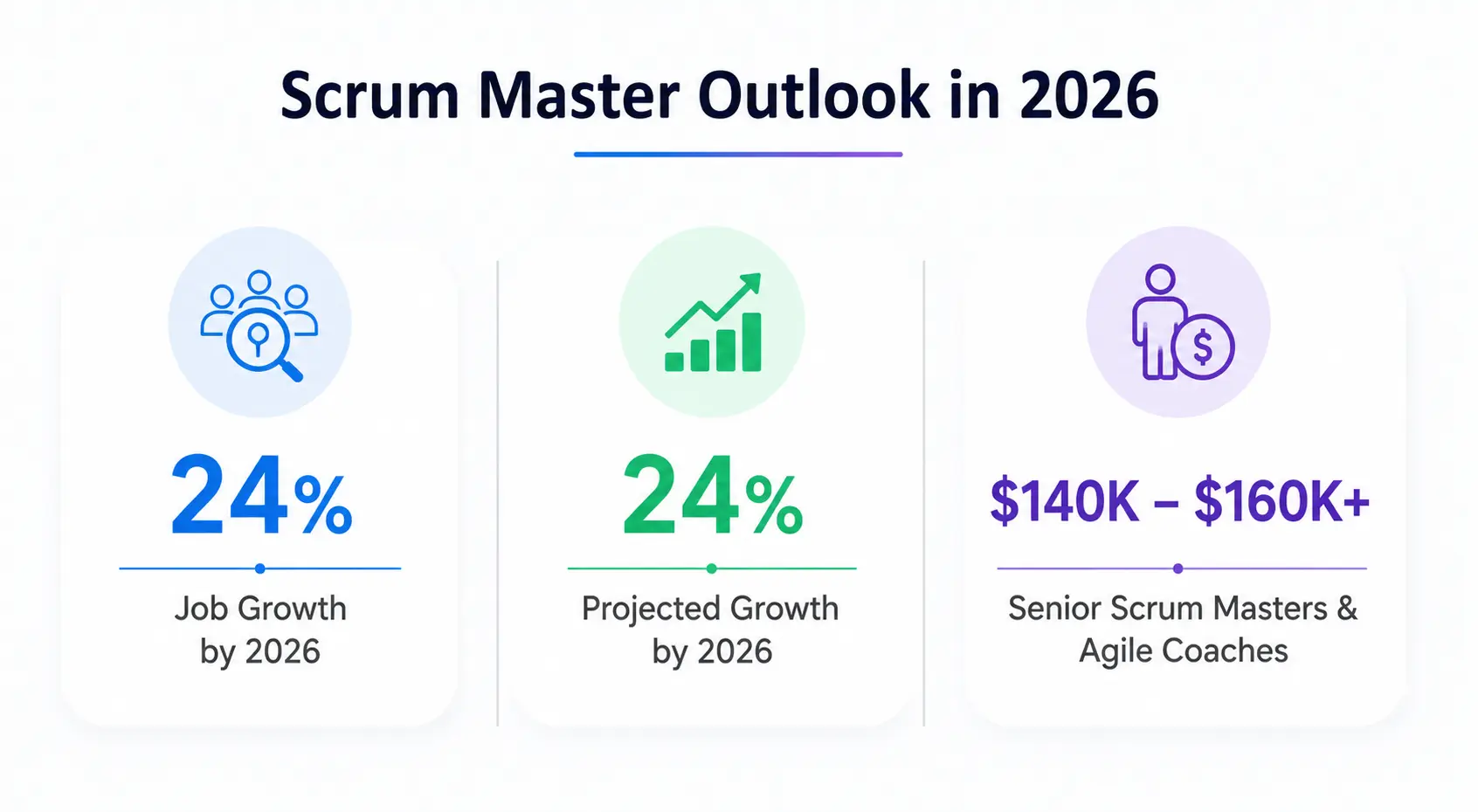
That kind of growth explains why so many candidates are willing to compare five or six programs closely before committing money and weeks of study time to just one.
Top Online Scrum Master Certification Programs Compared
Four certification programs that dominate the current market are the Certified ScrumMaster (CSM), the Professional Scrum Master (PSM I), the SAFe Scrum Master (SSM), and the PMI Agile Certified Practitioner (PMI-ACP). Each one tests a slightly different skill set and comes with its own cost structure, which is exactly why so many candidates get stuck comparing them.
Scrum.org‘s certification page confirms that a PSM I certification currently costs $200 USD per attempt, with no mandatory course and no expiration date once passed. On the other side of the market, Scrum Alliance’s course listings show that a CSM certification still requires a live 2-day training with a certified trainer, plus a 2-year professional membership bundled into the course price.
2026 review of Scrum credentials also notes that candidates register for the CSM, CSPO, and CSP-SM directly through Scrum Alliance, while the PSM family and the PSPO track stay under Scrum.org.
|
Program |
Provider | Training Format | Typical 2026 Cost (USD) |
Renewal |
|
CSM (Certified ScrumMaster) |
Scrum Alliance | Mandatory live 2-day online course | $800 – $1,400 |
Every 2 years, $100 + 20 SEUs |
|
PSM I |
Scrum.org | Self-study or optional course | $200 exam only |
None — valid for life |
|
SSM (SAFe Scrum Master) |
Scaled Agile | 2-day live course + exam | $550 – $1,100 |
Annual, around $100 – $195 |
|
PMI-ACP |
PMI | Self-study or bootcamp | $435 – $700 |
Every 3 years, 30 PDUs + fee |
According to the 2026 certification cost guide, the CSM course typically runs a 14-to-16-hour curriculum and finishes with a 60-minute, 50-question exam that requires 37 correct answers to pass. The PSM I exam is notably tougher on paper, since it demands an 85 percent score on an 80-question test in the same 60-minute window, which is why some candidates who want a less training-dependent path still choose the harder exam over the guided course.
What Do These Programs Actually Teach?
Despite the differences in exam format, the core content across a professional scrum master track and a CSM-style program overlaps heavily. Every reputable option covers the Scrum framework end to end: the three accountabilities, the product backlog, and the full set of scrum ceremonies, including sprint planning, the daily scrum, the sprint review, and the sprint retrospective.
Where they diverge is depth and application. A PSM certification leans harder into scenario-based questions that test whether a candidate can apply Scrum correctly under pressure, rather than simply recall definitions from the Scrum Guide. C
SM-style courses spend more class time on facilitation practice, role-play, and group exercises around running those ceremonies with a real team dynamic in the room, which some learners find easier to retain than pure self-study.
The Digital Project Manager’s 2026 certification rankings point out that advanced options exist for professionals who already hold an entry-level credential, such as the Advanced Certified ScrumMaster (A-CSM) or the Certified Scrum Professional-ScrumMaster (CSP-SM), both of which build on an active CSM credential rather than starting from zero.
SAFe’s SSM track takes a different angle entirely, focusing on how Scrum operates inside larger, multi-team enterprise environments rather than a single team’s day-to-day work.
What to Look for in a Training Provider?
Not every scrum master training provider delivers the same experience, even when two companies are technically teaching toward the same exam. A handful of practical checks separate a genuinely useful course from one that just recycles slides.
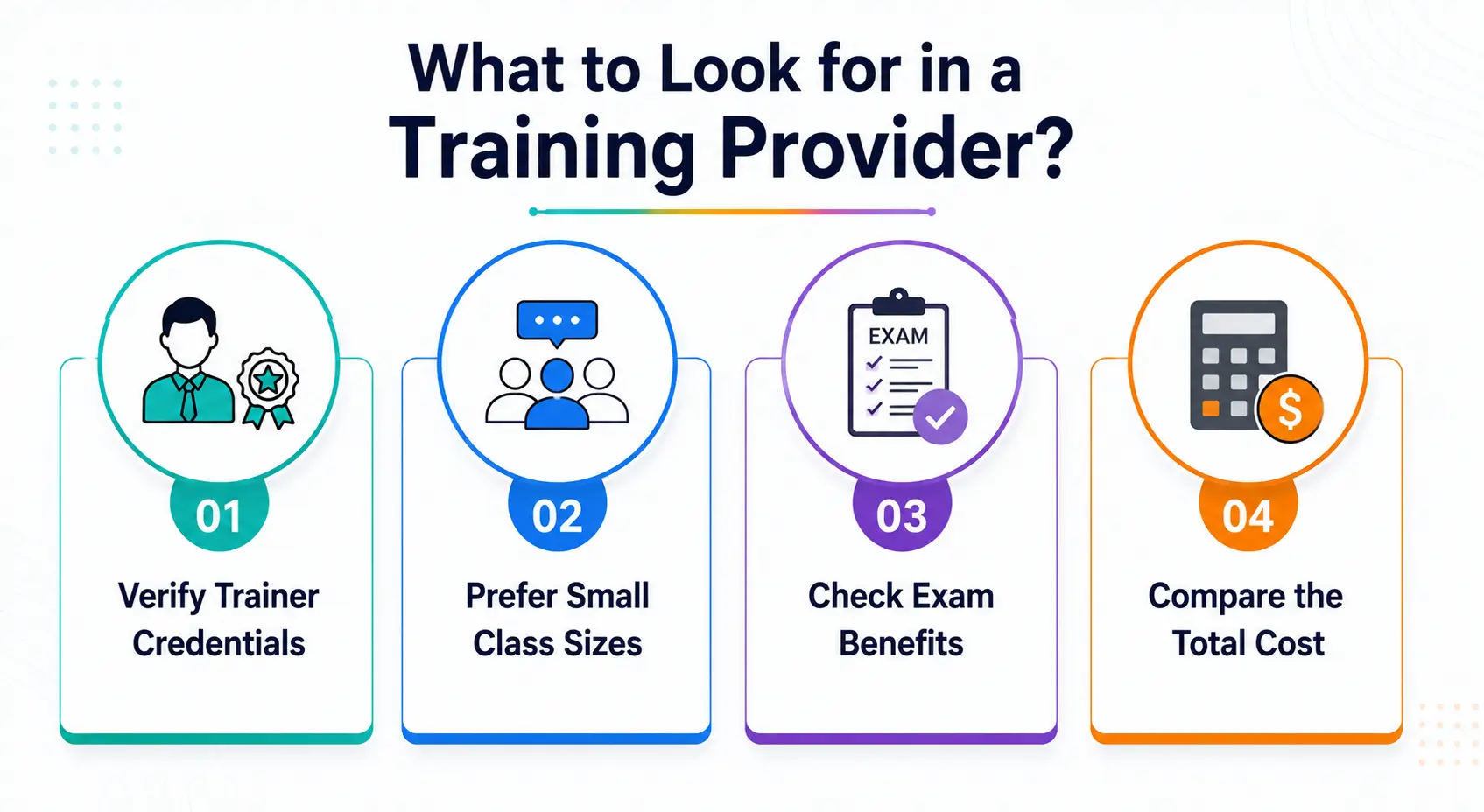
- Trainer credentials matter more than the marketing page. A Scrum Alliance course should be led by an actively certified Scrum Trainer (CST), not a generic “Agile coach” borrowing the branding.
- Class size affects how much real practice happens. Sessions capped around 20 to 25 participants tend to leave far more room for hands-on facilitation practice than oversized cohorts of 60 or more.
- Look for a free retake included in the price. Reputable scrum master training bundles, especially for CSM-style courses, typically include at least one free exam attempt within the course fee.
- Check whether the price is genuinely all-inclusive. Some providers advertise a low headline price and then charge extra for the exam voucher, workbook, or membership fee separately, which changes the real total significantly.
Any legitimate scrum certification worth paying for should also be transparent about its refund policy and provide direct access to the certifying body’s login portal, rather than routing everything through a reseller with no clear accountability.
How to Choose the Right Program for Your Career Goals?
The right online Scrum Master certification depends far more on the hiring market a person is targeting than on which program is objectively “harder.” Someone applying to companies that already run Scrum Alliance training internally will get more immediate recognition from a CSM credential, since hiring managers there already know the badge.
Someone targeting companies that lean toward independent, self-directed learning cultures — common in tech-forward startups — often gets more mileage from a PSM certification, precisely because it signals the candidate studied and passed without needing a guided course. For candidates eyeing large, SAFe-run enterprises in finance, insurance, or government contracting, the SSM credential tends to open more doors than either of the other two.
Budget matters just as much as recognition. A self-study PSM I path can realistically be completed for under $300 total, while a bundled CSM course with a name-brand trainer can run past $1,400 before renewal fees are even factored in.
None of that spending guarantees a job on its own—Coursera’s certification guide is clear that these credentials mainly demonstrate competency in Scrum principles rather than replace hands-on experience—but picking the option that matches both a target employer and a realistic budget avoids the common mistake of paying for training twice.
Conclusion
There is no single best online Scrum Master certification program that fits every career path, but there is almost always a clearly better choice once the target employer, budget, and preferred learning style are laid out honestly. Candidates who want employer name recognition and structured, live facilitation practice tend to land on the CSM path.
Candidates who prefer self-paced study and a credential that never expires usually gravitate toward PSM certification. Either path, paired with real practice running scrum ceremonies on an actual team, does more for a career than the certificate alone ever will.
A Personal Note
Writing about certification pricing and exam formats can start to feel purely transactional, so it feels worth adding this directly: choosing between these programs isn’t really about picking a “winner.” Early in almost every Scrum Master’s career, there’s a temptation to chase the most prestigious-sounding badge instead of the one that actually matches the team already being worked with.
The candidates who benefit most tend to be the ones who pick a program, commit to actually applying what it teaches inside real sprints, and treat the certificate as a starting point rather than a finish line.