






Every year around this exact week, my inbox fills with subject lines screaming about the “biggest sale of the season,” and most of them are the same 10% markdown dressed up in red banners. US holiday retail spending is projected to hit $1.70 trillion to $1.71 trillion this year, up 4.0% to 4.8%, and training providers know exactly how much attention shoppers are paying during this stretch of the calendar.
That’s precisely why so many cyber monday certification deals show up now instead of being spread evenly across the year — but a flat percentage off a catalog that never needed a discount to begin with isn’t the same as a genuine deal. The real test isn’t the size of the number on the banner; it’s whether the price drop applies to the course you’d actually enroll in anyway, rather than a handful of slow sellers nobody was asking about.
ThinkCloudly’s version this year is simple to describe and easy to verify: a flat 30% off every certification course in its catalog, no fine print carving out the courses people actually want. Online sales during the Cyber Week stretch alone — Tuesday through the Monday after Thanksgiving — are expected to reach $357 billion globally, up 6% year over year, which is exactly the kind of attention window that makes this specific round of Cyber Monday certification deals worth a closer look rather than a quick scroll past.
Before deciding whether this 30% discount is worth your money this week, it helps to understand why the timing matters, what the discount actually includes, and which mistakes quietly undo the savings people think they’ve locked in.
Why Does This Year’s Cyber Monday Certification Deals Matter?
A discount only matters if the thing behind it is worth having at full price too, and the data heading into 2027 makes a strong case for IT certifications specifically. CompTIA’s latest State of the Tech Workforce research found that cybersecurity analyst and engineer roles are projected to grow roughly 346% over the next ten years — a figure that dwarfs growth projections for almost any other occupational category tracked in the US tech labor market. That kind of curve doesn’t flatten out because a sale ends in December; it’s the backdrop against which every discounted course this week should actually be judged.
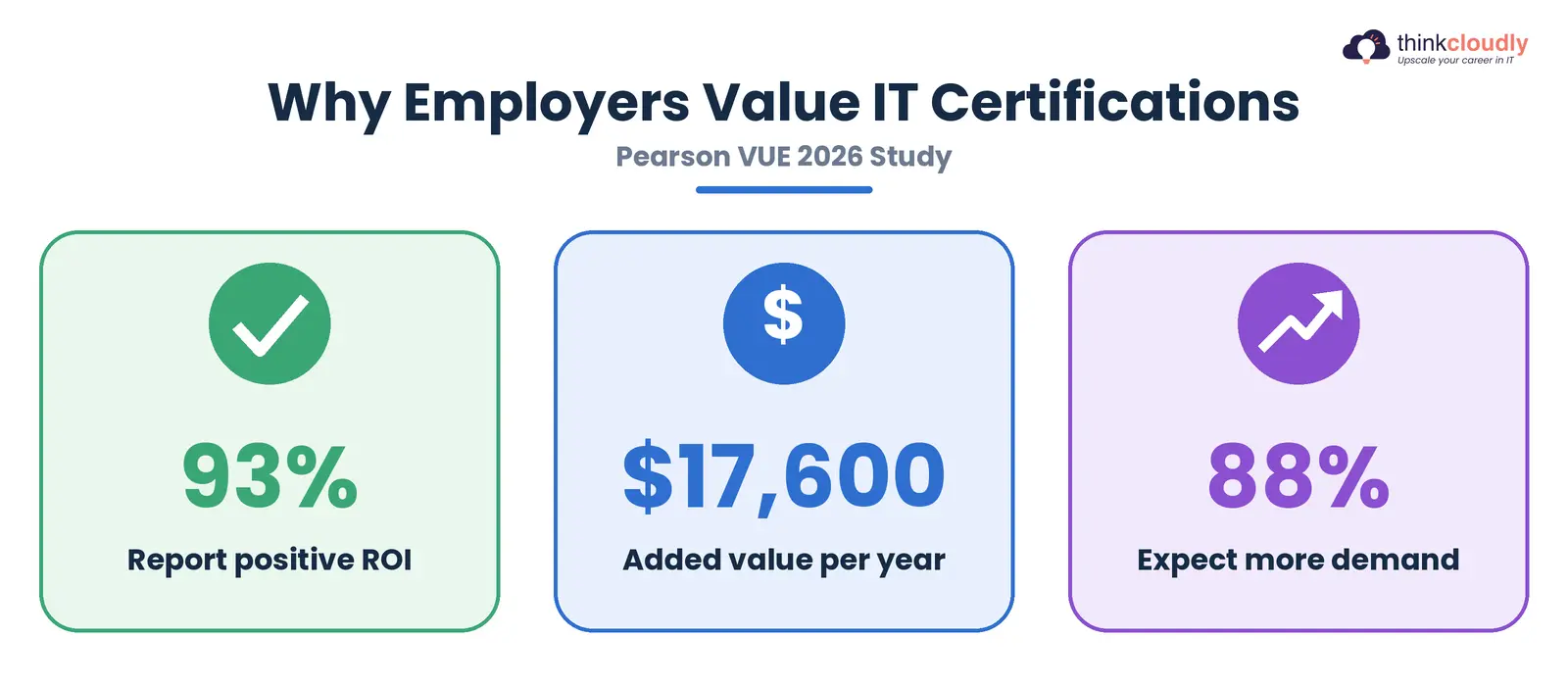
Employer behavior backs this up just as clearly. A 2026 Pearson VUE study of IT and HR leaders found that 93% of employers report a positive return on investment from certification, with the average certified employee valued at roughly $17,600 a year above an uncertified peer, and 88% of employers expecting certifications to matter even more to their organizations within three to five years.
The credential itself is becoming more valuable to employers at the exact moment a flat 30% discount is making it temporarily cheaper to earn. That combination, not the marketing copy, is the real reason this week’s discount window deserves more than a passing glance.
Why Can a Flat 30% Off Beat a Two-for-One Structure?
Plenty of training providers run a “buy one, get one free” structure during this same week, and on paper it sounds like the bigger win. In practice, it only pays off if you genuinely need two certifications right now and can realistically finish both before access expires. A flat percentage works differently: it lowers the price on the single course you actually need without pressuring you into a second enrollment just to make the math feel worthwhile.
That distinction matters more than it sounds. Solo learners, career switchers targeting one specific role, and anyone who already tried stretching a two-for-one deal across two unfinished courses in a previous year tend to get more value out of a straightforward percentage cut. There’s no second access window to track, no second exam to schedule around a job and a life that are both already busy, and no temptation to pick a “free” course just because it was free rather than because it fit an actual career plan.
Certification Sale Pricing: This Week’s 30% Off
Pricing swings more by track than by provider, so here’s roughly how the major categories compare this week once ThinkCloudly‘s 30% off discount is applied against standard catalog pricing.
|
Certification Track |
Best Suited For |
|
Cloud Computing (AWS, Azure, GCP) |
Cloud engineers, infrastructure teams |
|
Cybersecurity (Security+, CEH-track) |
SOC analysts, security engineers |
| Governance, Risk & Compliance |
Risk analysts, audit and compliance staff |
|
Data & Cloud Analytics |
BI analysts, reporting leads |
| Project & IT Service Management |
Project leads, service delivery managers |
Every row above reflects the same flat discount, which is the real test of whether a certification sale is worth trusting — a provider that applies 30% evenly across every track isn’t steering buyers toward whatever course happens to be overstocked.
Who Should Actually Use This IT Certification Discount?
Not every learner benefits equally from a percentage-off structure, and pretending otherwise just leads to an unfinished course sitting untouched come January. This particular round of cyber monday certification deals tends to make sense for:
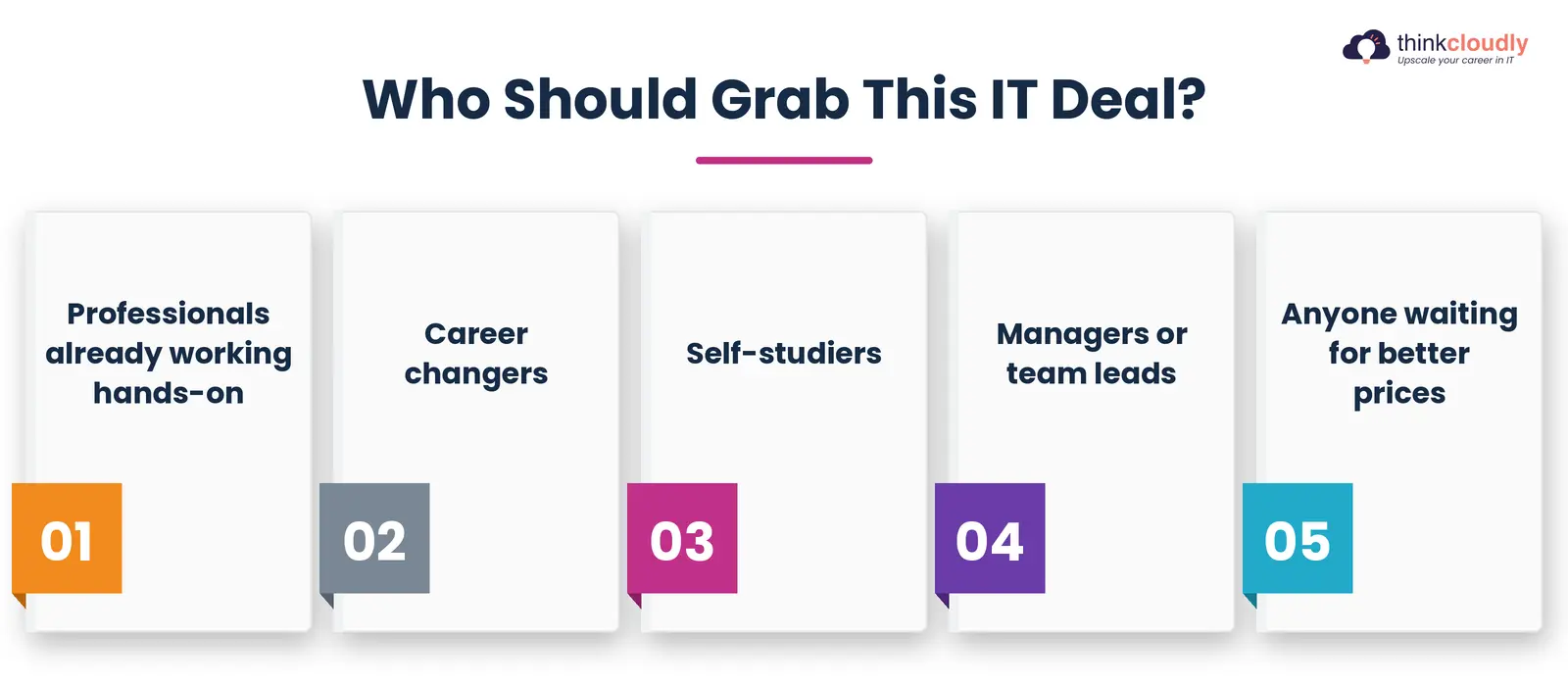
- Professionals already working hands-on in cloud, security, or risk roles who are missing only the paper credential standing between them and the next pay grade.
- Career changers moving into tech from an adjacent field who want a structured, exam-mapped course rather than scattered free tutorials pieced together from forums.
- Self-studiers who’ve been circling an exam date for months and just need a firm deadline, plus a lower upfront cost, to actually commit.
- Managers or team leads budgeting training for a small group, where 30% off a handful of seats adds up to a meaningful line-item saving.
- Anyone who already compared a few providers earlier in the year and was waiting for the price to drop before committing to a decision they’d already made.
If none of that describes your current situation, there’s genuinely no cost to waiting. This same discount structure tends to repeat around this exact week every year, so buying a course before there’s a real plan to finish it just moves the spending earlier on the calendar instead of saving anything at all.
Checks Worth Running Before You Click Enroll
A 30% banner can distract from questions that actually determine whether a course is worth having at all. Before locking in any cyber monday certification deals this week, confirm the following directly with the provider:
- Which exam version or blueprint the course is mapped to, by name, not a vague “kept current” claim.
- Whether the exam voucher is bundled into the discounted price or sold separately once you’re already checked out.
- What the retake policy actually covers if the first exam attempt doesn’t go as planned.
- Whether the 30% pricing itself has an expiration date separate from the course access window.
- How long you retain access to course material and the practice-question bank after the exam gets scheduled.
Skipping these checks is how a seemingly great IT certification discount turns into a course that technically closes before you finish it, or an exam voucher you end up buying again separately a few weeks later.
Making the Discount Count Through 2027
Finishing the course and letting the certification sit half-studied is the single most common way people waste this kind of catalog-wide discount. Enterprise demand for cloud, security, and risk talent isn’t slowing down heading into 2027, and a 30% discount purchased with an actual plan behind it does more for a career than the same money spent chasing whichever course happened to carry the loudest banner.
The Bottom Line
Strip away the marketing language and the math is straightforward: this year’s cyber monday certification deals amount to a genuine flat 30% off training that normally runs into four figures per course, applied catalog-wide rather than to a handful of slow-moving tracks. That consistency is what actually makes this discount worth acting on this week rather than waiting for a smaller, less generous version of it later in the year.
A Personal Note
A cousin texted me earlier this week asking whether she should finally commit to a cloud certification or wait to see if a better percentage shows up closer to December. My honest answer was that the discount wasn’t really the deciding factor in her situation.
She’d already known for the better part of a year that the one thing standing between her current help-desk role and the infrastructure job she actually wanted was a credential, not more hands-on experience. For someone already in that position, a 30% discount window is simply the week the math finally tips in her favor — the decision was made months ago, and the discount just made it cheaper to act on.
The people who end up disappointed by a certification purchase are almost always working backward from the discount instead of forward from an actual goal. If you’re not yet sure which track genuinely moves your career forward, spend this week figuring that out before spending a cent on it. The price will still be fair once the answer is clear — but if the answer is already clear, there’s very little reason to let this particular 30% window pass by unused.
Note :- Pricing, offer structure, and course inclusions above reflect typical ranges for this sale season and are subject to change without notice — confirm the exact terms, voucher inclusion, and access window directly with ThinkCloudly before enrolling.