Would it surprise you to learn that two people can both walk away with a Scrum Master credential this year, one having spent $200 and three weeks of evening study and the other having spent close to $1,500 and a full week of paid leave, for what recruiters will often treat as roughly the same line on a resume?
That gap is exactly why so many people researching Scrum Master training and certification end up more confused after an hour of Googling than they were before they started. Prices are scattered across a dozen provider websites, timelines depend on which credential is chosen, and nobody seems to agree on what actually counts as “worth it.”
This guide lays out the real costs, the honest timelines, and the trade-offs behind the most recognized paths in 2026, so the decision can be made with facts instead of guesswork.
Why Do Scrum Master Training and Certification Costs Vary So Widely?
The first thing worth understanding is that “Scrum Master certification” is not one single product; it is a small marketplace of competing credentials, each with a different owner, exam format, and renewal model.
Scrum Alliance, Scrum.org, and Scaled Agile all issue their own version, and the price differences come down to whether instructor-led training is mandatory, how long the credential stays valid, and how much of the fee goes toward ongoing membership rather than a one-time exam.
Anyone comparing Scrum Master training and certification options side by side needs to look past the sticker price and ask what is actually included, because a lower scrum master certification cost sometimes hides a much larger total cost once travel, materials, and renewals are added in.
Scrum Master Certification Cost: A 2026 Breakdown by Credential
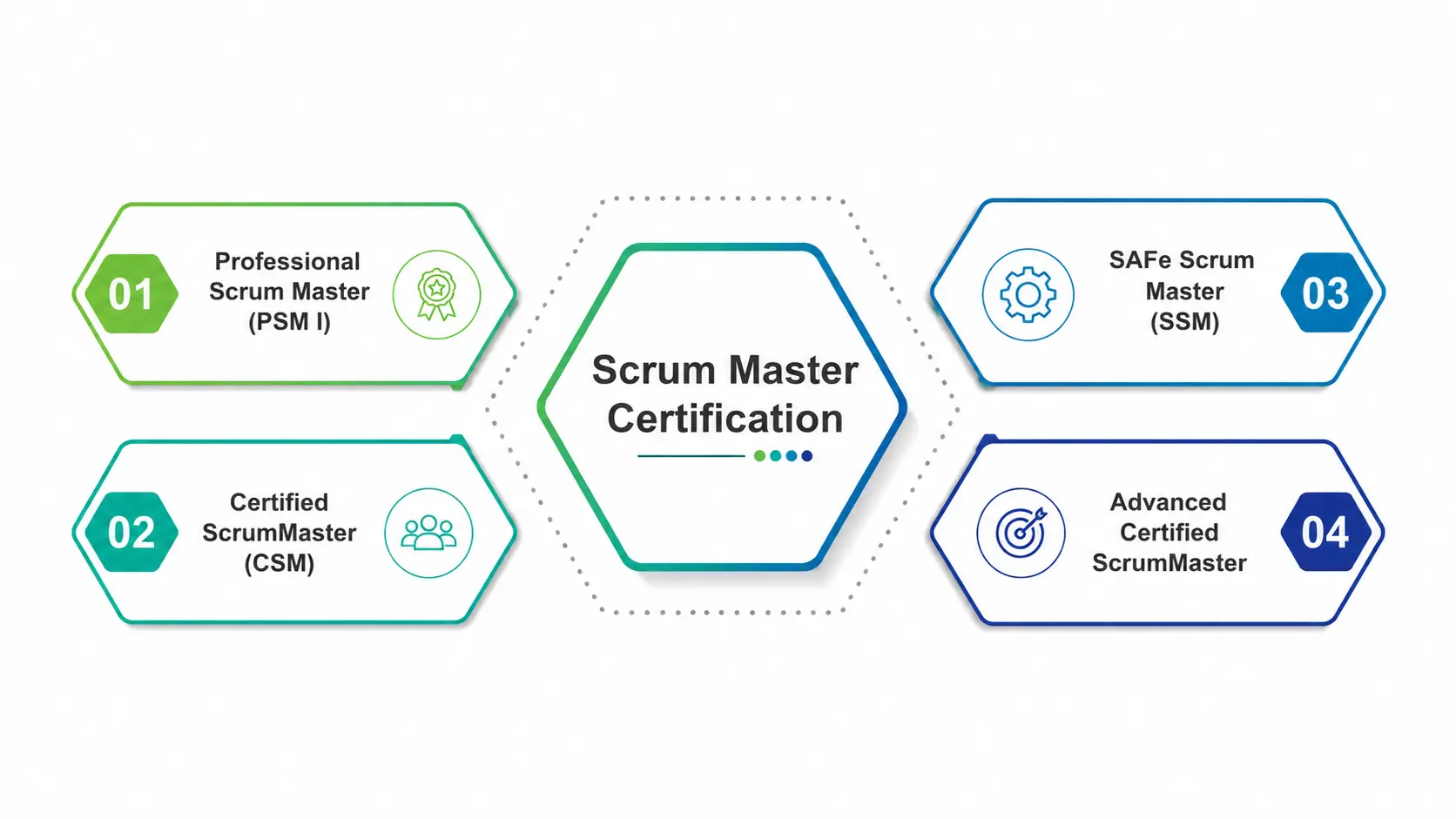
1. Professional Scrum Master (PSM I)
PSM I is the budget option, and it is also the most self-directed. According to Scrum.org‘s official page, the PSM I exam costs $200 USD per attempt, and there is no mandatory training course attached to it. Candidates study the Scrum Guide independently, take an 80-question timed exam, and need to score 85 percent to pass.
There is no renewal fee and no expiration date, which makes this scrum master certification cost the lowest of the major credentials by a wide margin, provided the candidate is comfortable studying alone rather than sitting through a guided class.
2. Certified ScrumMaster (CSM)
CSM sits at the opposite end of the spectrum because Scrum Alliance requires a live, instructor-led course before the exam is even unlocked. Based on CSM pricing data 2026, course pricing runs roughly $250 to $2,495 depending on the trainer and format, with most candidates in the U.S. landing somewhere between $800 and $1,500 for the full package, including two exam attempts and the first two years of Scrum Alliance membership. Unlike PSM I, this credential is not permanent.
3. SAFe Scrum Master (SSM)
SSM is built for people who expect to work inside larger, multi-team environments using a scaled agile scrum methodology rather than a single-team setup. A 2026 pricing guide for SAFe Scrum Master training puts the standard rate for a two-day accredited class in the U.S. and Western Europe between $900 and $1,100, with a separate annual renewal requirement to keep the credential active.
This path makes the most sense for anyone already working or planning to work in an organization built around scaled coordination practices rather than plain single-team Scrum.
4. Advanced Certified ScrumMaster
For Scrum Masters who already hold a CSM and want to move up, the Scrum Alliance also offers the Advanced Certified ScrumMaster credential. Training typically costs between $800 and $1,200, according to current 2026 certification cost breakdowns, and renewal every two years runs $175 plus 30 SEUs.
This option is worth considering only after at least a year of hands-on experience, since Scrum Alliance requires proof of practical work in the role before allowing candidates to register.
Cost and Timeline at a Glance
|
Credential |
Typical 2026 Cost | Mandatory Training | Typical Timeline |
Renewal |
|
PSM I |
$200 exam only | No | 3–6 weeks self-study |
None, valid for life |
|
CSM |
$800–$1,500 | Yes, 2-day live course | 1–2 weeks prep + 2-day course |
$100 + 20 SEUs every 2 years |
|
SSM |
$900–$1,100 | Yes, 2-day live course | 1 week prep + 2-day course |
Annual fee applies |
|
A-CSM |
$800–$1,200 | Yes, plus 1 year experience | Varies, requires prior CSM | $175 + 30 SEUs every 2 years |
How Long Does Scrum Master Training and Certification Actually Take?
Timelines get discussed far less often than price, but they matter just as much for anyone trying to plan around a job search or a promotion cycle. The self-study route through PSM I generally takes between three and six weeks for someone learning the scrum framework from scratch.
The instructor-led routes move differently. CSM and SSM both bundle a fixed two-day live course into the process, so the “hard” timeline is short and non-negotiable, but the soft timeline, meaning the time spent preparing beforehand and applying for available course dates, usually adds another one to two weeks.
Anyone comparing Scrum Master training and certification paths purely on speed should note that the cheapest option, PSM I, is also usually the slowest to complete properly, since there is no scheduled class forcing a deadline.
A Practical Note on Real-World Costs Beyond the Sticker Price
Course fees are only part of the total spent on getting certified. A live, in-person CSM or SSM class often means two full workdays away from a job, which is a real cost even when a company covers the tuition itself.
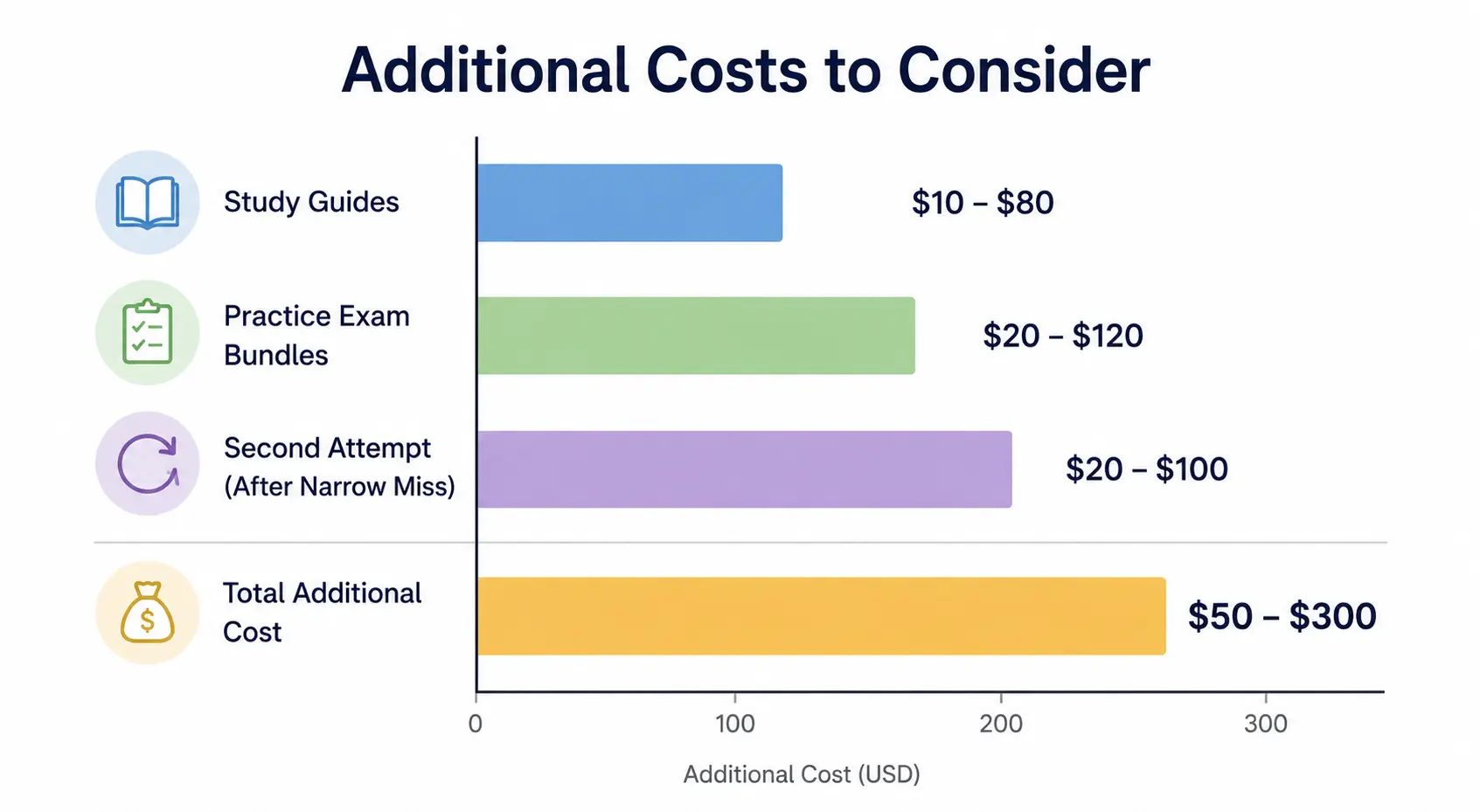
Study guides, practice exam bundles, and a second attempt after a narrow miss can add another $50 to $300 on top of whatever the official course charges. Anyone budgeting for agile and scrum certification should set aside a small buffer for these extras rather than assuming the advertised course price is the final number.
There is also a quieter cost that rarely shows up in pricing pages: the learning curve after the exam is over. Passing a certification exam proves someone understands the theory behind scrum project management, but applying that theory to a real team with real deadlines, real personalities, and real scope changes is a different skill entirely.
Budgeting a little extra time in the first few months on the job to lean on a mentor, a local Agile meetup, or an online community tends to pay off more than any single exam ever could.
Which Certification Path Actually Fits Your Situation?
Rather than picking whichever credential shows up first in a search result, it helps to work backward from the actual job being targeted. Someone applying to smaller product companies running a single Scrum team will usually get more mileage out of PSM I or CSM, since both are built around single-team Scrum rather than large-scale coordination.
Someone targeting a role inside a large enterprise that has already adopted a scaled agile scrum methodology across multiple teams is better served by SSM, since interviewers in that environment often expect direct familiarity with SAFe terminology and ceremonies.
Budget and learning style matter just as much as the target role. A disciplined self-studier who prefers working through material independently, without a fixed class schedule, tends to do well with PSM I, since it rewards patience over structure.
Someone who learns better in a live classroom, with a trainer answering questions in real time, usually gets more value out of CSM or SSM despite the higher price tag. There is no single “best” answer within the broader agile and scrum certification landscape, only the option that fits the working environment and the learning style already in play.
Is Scrum Master Training and Certification Worth the Investment?
For someone already working informally in scrum project management without a title to match, a credential mainly validates existing knowledge and can help clear automated resume filters that specifically search for terms like “Certified ScrumMaster.”
For someone entirely new to the field, proper Scrum Master training and certification do more heavy lifting, since the structured course or study plan is often the fastest way to actually absorb how the Scrum framework works in practice rather than just in theory.
Either way, comparing the full agile and scrum certification landscape before paying for the first option that appears in a search result usually saves both money and wasted time.
Conclusion
Choosing the right path through Scrum Master training and certification comes down to matching the credential to the actual working environment, not just picking whichever one has the most recognizable initials.
PSM I rewards patient self-study and a tight budget; CSM offers strong name recognition for a higher and recurring cost; and SSM makes the most sense for large-scale, multi-team organizations. Whichever route gets chosen, understanding the realistic pricing and timeline upfront prevents the common mistake of signing up for the wrong course and then feeling stuck halfway through.
For those who want structured guidance rather than piecing this research together alone, ThinkCloudly’s training programs walk candidates through the full preparation process for these certifications, including live practice sessions, mock exams, and direct access to trainers who have actually worked as Scrum Masters.
Learners also get ongoing support after the course ends, which tends to matter more than people expect once real sprint planning and stakeholder conversations start happening on the job.
A Personal Note
I have spent enough time around Scrum teams to know that the certificate on the wall matters far less than what a person does with it in week one on a real team. If there’s one thing worth remembering from everything above, it’s this: pick the credential that fits how you actually learn and where you actually plan to work, not the one with the shiniest name.
The exam is the easy part. Showing up prepared for a messy retrospective or an anxious stakeholder is where the real learning happens, and no certificate can substitute for that.